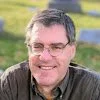
Why Send a Farmer to St. Paul?
Why is Jack Hedin running to represent Minnesota Senate District 26 in the Minnesota Senate? In this clip from his speech at an August 22, 2026 rally, he explains how his experience running a three-tier farm business qualifies him to serve...and what he hopes to accomplish.
Prefer to read a transcript? Scroll down!
Transcript
[…] my partner, and my brother Ed, who's here, and a handful of very hopeful volunteers, some of whom may even be here at this time. You're still in the community. It's a wonderful thing to have this legacy of employees and community members that have been part of it. But we were very energetic. We were willing to work very hard for very little money, because we were idealistic.
We were ready to save the world with organic vegetables. And 32 years later, the real remarkable thing is that we have survived. With that—going into that attitude—we are still here.
Through all the ups and downs, we have survived. And so I'll give you just a couple of numbers that Nathan confirmed with me this morning as to Featherstone Farm right now, this day and age, 2026. We manage about 250 acres in rotation, with 140 acres of fresh market, certified organic vegetables planted every year, with the help of 55 full-time employees.
And this past week, we shipped another 100 full pallets of produce, which is the equivalent of four full semi-trailer loads of produce a week. So we are feeding hundreds of thousands of people from this facility that you're visiting here today. We've come a long way in these 32 years.
So why is any of this relevant to my campaign for Minnesota Senate, or the service that I propose to do as your Minnesota Senator? It's relevant because I believe that the founding and growth and management of this farm business for three decades has given me really valuable experience and insights that will help me be a better problem solver as a leader in the Minnesota Senate. I'm going to give you three very quick examples of this very relevant experience for me.
Number one: Featherstone Farm is a very complex business that has taken decades to evolve into a well-organized and managed operation. I won't go into it in any great depth, but essentially what we have here are three entirely separate business models, all taking place, all happening under a single roof. And the time and energy it's taken me to understand this has given me a great deal of grounding in reality and wisdom and managing people and making decisions and in leadership. And these are things that I believe are very, very relevant to service in St. Paul.
Second, Featherstone Farm is and has always been a remarkably diverse place, with English speakers, Hmong speakers, Spanish speakers, Pennsylvania Dutch speakers working at different times on the payroll. It's been a very exciting, very diverse place to work—and not just ethnically, but also culturally and politically.
We have a very wide spectrum of people of all beliefs working here in this building. And that presents real challenges and opportunities, as in the pandemic six years ago, when, as an essential business, Featherstone Farm, with its 50 employees—many of whom had very divergent views about masking and vaccines and everything else—were working together under one roof, day in, day out. Managing our way through that is a really good test case for how to manage people of diverse perspectives and diverse values in a situation like St. Paul.
Finally—third and final—Featherstone Farm has faced and overcome an unbelievable array of huge challenges over the 32 years that we've been in business: the flood of 2007 that we referred to earlier, which forced our relocation from Winona County here over the course of a two-year period; the chronic growing pains that emerged with the debt immediately following that move, which we had to work through over time.
We had ICE enforcement activity right here at Featherstone Farm in 2013 and lost seven critical employees right in the middle of the growing season. We survived yet another state-declared, weather-related disaster in 2016, and then the pandemic. So once again, I've had the opportunity, with Nathan and so many others, to lead through really difficult times and solve really difficult challenges.
And this, again, to my mind, is really good preparation for the type of work that I can and will undertake as your next Minnesota Senator. So here's the final reason. Thank you.
The final reason that I believe my three decades of work at Featherstone Farm has prepared me well for leadership at the state level is that the process of envisioning, founding, and operating this business for three decades has given me a remarkable understanding and appreciation of the importance—the vital importance—of a healthy rural economy and rural community, in businesses like this and in our lives in outstate Minnesota. I have had so much opportunity to learn and to grow and to appreciate the value of local business owners and community leaders who work together to support people and institutions and our rural way of life.
When the chips are down, and even when they are not, we work together here in rural Minnesota in a way that is not unlike the Minnesota neighboring that we saw in Minneapolis just this past year. It is a remarkable community and energy of rural people that I've been privileged to be part of as a small business owner and operator, and that I want to and intend to fight for as your next Minnesota State Senator. We are capable of solving these big things when we work together, and that's what we've been doing here in southeast Minnesota for a long time, with the flood and beyond.
So if all is as well and fine here at Featherstone Farm and in this rural community as I'm making it sound, why then am I running for Minnesota Senate? Why wouldn't I just continue in the slow glide path of retirement, planting trees, renovating homes, as I intended to do as recently as two years ago? The answer for me is that the Minnesota miracle—this idea that government works for Minnesotans—is under stress right now. A lot of this stress comes from Washington, D.C., and our national leaders, but some of it comes from right here within our state, in the form of fraud. It adds up to a climate where I fear that we Minnesotans are losing faith in public servants. And yes, I mean public servants: the type of people who are elected to serve members of your community, not the other way around.
I fear that Minnesotans are not just losing faith in public servants, but in the fundamental idea of public service in general—the idea that government can actually do things to begin to solve the problems that we all know are out there. And I don't want to see us lose faith, because I'm an idealistic guy, remember? And I'm also practical, realistic about many things, because I've run a successful for-profit business for three decades. I believe that it is this combination of high idealism and practical realism that gives me the best chance to engage with policymakers, to engage with the public, and to engage with the Minnesota Senate as an agent for positive progress, bridge building, and problem solving in the Minnesota State Senate, which I believe we need now more than ever.
This is the kind of thing that I have done with hard work and high vision at Featherstone Farm for three decades, and it's the work that I want to continue in the Minnesota State Senate. So I've been campaigning for four months now, knocking on doors throughout the district, all over, talking with voters and hearing important things, learning unbelievable things about our district. I'm going to cite the three things that I hear most often at doors, and why I think they're relevant here.
First of all, fraud. People are sick of it. They're sick of hearing about money being wasted. They're angry. They want it stopped right away, and they want some assurance that this will no longer come back, that it will be over and done with, that it never happens again. So here's the good news: I'm sick of it too, and I'm determined to make sure it stops for good.
Moreover, our future governor, who you just heard from, is a federal prosecutor who, in her very first policy statement as a gubernatorial candidate, came out with a 40-point plan to defeat fraud and to ensure that Minnesotans regain confidence in public accountability once again. Thank you, Senator Klobuchar, for that.
For my own part, I've run a farm business for 30 years through some pretty lean times. I've had to get pretty good at holding people accountable, at oversight and auditing, for making sure that I know where the dollars are going—to the right places, at all times. I do accountability for a living, and have done this for three decades.
The governor and I will work tirelessly together with Dan and Ali to make sure that we put this dark chapter of fraud behind us, in the rearview mirror, and leave it there for good.
The second thing that I hear from people at doors, and I hear very often, is this general sense of the hollowing out of our small town and rural economy. I get this too. I've seen it: so many small businesses, locally owned businesses, in the past 30 years closing or being bought out by big shots from outside the community. Fewer homes being built. Smaller class sizes, along with shrinking school budgets. Small-town clinics closing. And maybe worst of all, the perception that leaders in St. Paul—particularly leaders from my own party—do not understand or care about any of this.
The perception. Well, I care. And if I'm elected to the Minnesota Senate, I am going to work on this starting day one.
Look, I understand that this hollowing out has been going on for generations. I understand that there are huge and powerful forces at work—look no further than the dollar stores and Walmart—that are determined to keep the dollars flowing out of our community at the expense of local residents like ourselves. It will take generations of focused work to turn this around.
I am not promising to change anything in a day, a week, or even a single term in the Minnesota Senate. I think so many of us are sick of politicians promising things that we cannot and will not deliver. But I am promising to work on this with focus and determination, starting day one, on my inauguration in the Minnesota Senate. And I will be back in Rushford and Brownsville and Rollingstone and Spring Valley in the years to come to report on my progress, to answer your questions, and to keep the progress moving forward—to be accountable to you, the people I'm working for.
Finally, the third and perhaps most important thing that I hear from doors when I knock, talking to people across this district: frustration at partisan bickering. People are sick of politicians in red and blue camps shouting at each other but never talking or listening. People are sick of hearing about partisan logjams, about important issues being kicked down the road yet again for lack of common-sense compromise solutions that seem all but impossible. So here too, I think we have a bit of good news to offer you here today.
I'll start once again by giving credit where credit is due to Senator Klobuchar, who time and time and time again has shown a willingness to cross the aisle and work with Republicans of goodwill to engage on practical, common-sense solutions on things that matter for average Americans and average Minnesotans. My hat's off to Senator Klobuchar for working on this. Thank you.
I look forward to working with you in St. Paul on just this sort of bridge building and problem solving. Because I too have worked very closely, for many decades, with people that I do not agree with politically but who I respect as human beings. I am a farm owner and small business operator. This is what I do for a living in rural Fillmore County every day.
Like with fraud and with the hollowing out of rural economies—maybe even more so—of course I recognize that there are huge and ugly dimensions of politics right now that will take years to overcome. I recognize that smarter, better people than I have worked lifetimes to try to clean this up and have failed, and have backed out of politics for lack of progress.
But what does this mean? That it's all a waste of time? That the problems of government and of public affairs are too big and too tough to even try and fix? That we might as well retreat to our own homes and families and keep our heads down when the stuff really hits the fan? No. I am here to say, emphatically, no. That is not who we are.
I am idealistic, remember? I truly believe, as I believe we all believe, in government of the people, by the people, and for the people. And this is why I'm running for Minnesota State Senate. This is why I think this time is so important right now for my voice and my experience in St. Paul. This is why I'm asking for your help to get elected, so that we can begin to restore faith in public policy and in public leadership, now, while we still can. Thank you. Thank you so much.
Thank you for showing up. Thank you for your faith in our democratic process. Thank you for your faith in us as leaders. Thank you for your time. Thank you for the work you will put in on behalf of all of us candidates. Thank you for your time.