What I'm Hearing about Healthcare in SE MN — and What I Think We Can Do
Healthcare affordability and access are issues that come up often as I travel around SD 26. And as a small, independent employer, I can relate! A few years ago, when Featherstone Farm finally reached a point where we could seriously consider providing health insurance for employees, our management team sat down with insurance providers and got a thorough briefing.
The cost per employee was prohibitive. Even the most basic bronze-level policies — the kind with $12,000 deductibles — ran into five figures per individual, because we were a small organization without the bargaining power of a large employer. We ended up offering a flat monthly contribution toward health insurance for our senior employees, and leaving it to each person to shop for whatever plan they could afford.
Within the past year, we lost a beloved employee – a key member of our management team– because changes in her personal circumstances meant she could no longer afford to work at Featherstone without health benefits. She loved her work with us, had contributed SO much over her 8+ years at the farm, and we depended on her, so it was a hard transition all around. And it was all about health insurance.
This isn’t an isolated story; I know many small business owners across SE Minnesota who face a similar problem. The reality is that the employer-based healthcare system puts small, locally-owned businesses at a serious competitive disadvantage. Large corporations can offer benefits and absorb the administrative burden that goes with them. Those of us running small businesses can't.
The result is a steady drain of talented people away from small employers — toward bigger institutions, toward the cities, sometimes out of the region entirely. That's not good for SE Minnesota! Reforming our healthcare system isn't just a healthcare issue; it's an economic development issue.
A few weeks ago, I had the chance to dig into this more directly. On a Saturday morning, I gathered on my back porch in Winona with a small group of local healthcare providers: two physicians, a nurse who works in trauma care and also teaches nursing at Winona State, and a nurse practitioner — all of them working in our region. I asked them to share what they see from the ground: what problems their patients face around access and affordability, and where state-level policy might actually move the needle.
We talked for nearly two hours. A lot came up. But the story that stayed with me most was one of the physicians describing an older patient — a senior citizen managing several different medications.
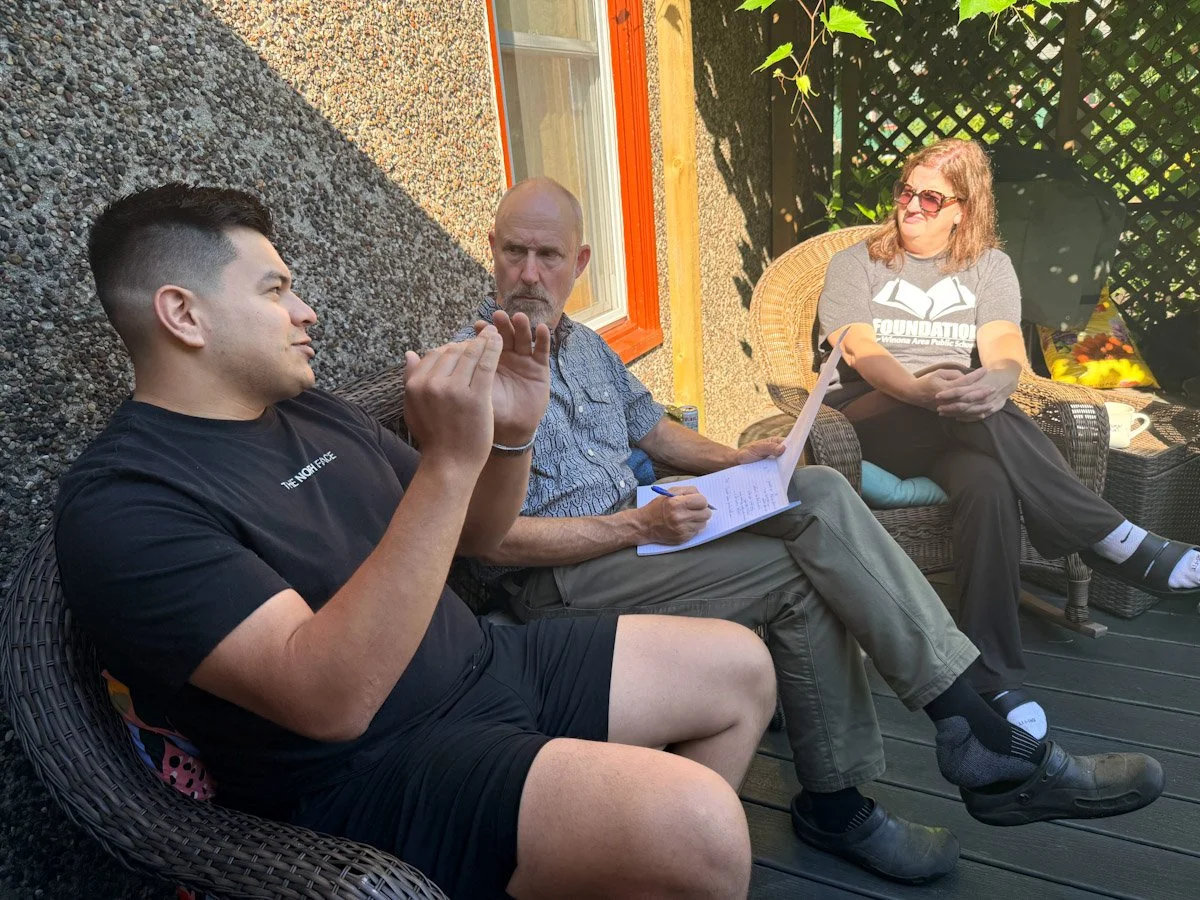
At a recent listening session, healthcare workers shared their experience here in Southeast Minnesota along with ideas for things the state could do to address pain points.
This woman had done her homework. She knew that the same medications were priced very differently depending on where you filled the prescription: which pharmacy, which discount program, which state. So she worked out a system — she asked her doctor to phone in different prescriptions to different pharmacies in different locations, including one across the border in Wisconsin, because that was the only way she could afford what she needed.
Basically, then, this woman had turned managing her prescriptions into a part-time job! The physician's takeaway, and mine: our system is seriously broken when that's what a person has to do just to afford her medication. And the brokenness isn't accidental — it has a lot to do with deliberate complexity and a lack of transparency that works out very well for some players in the system, and very badly for patients.
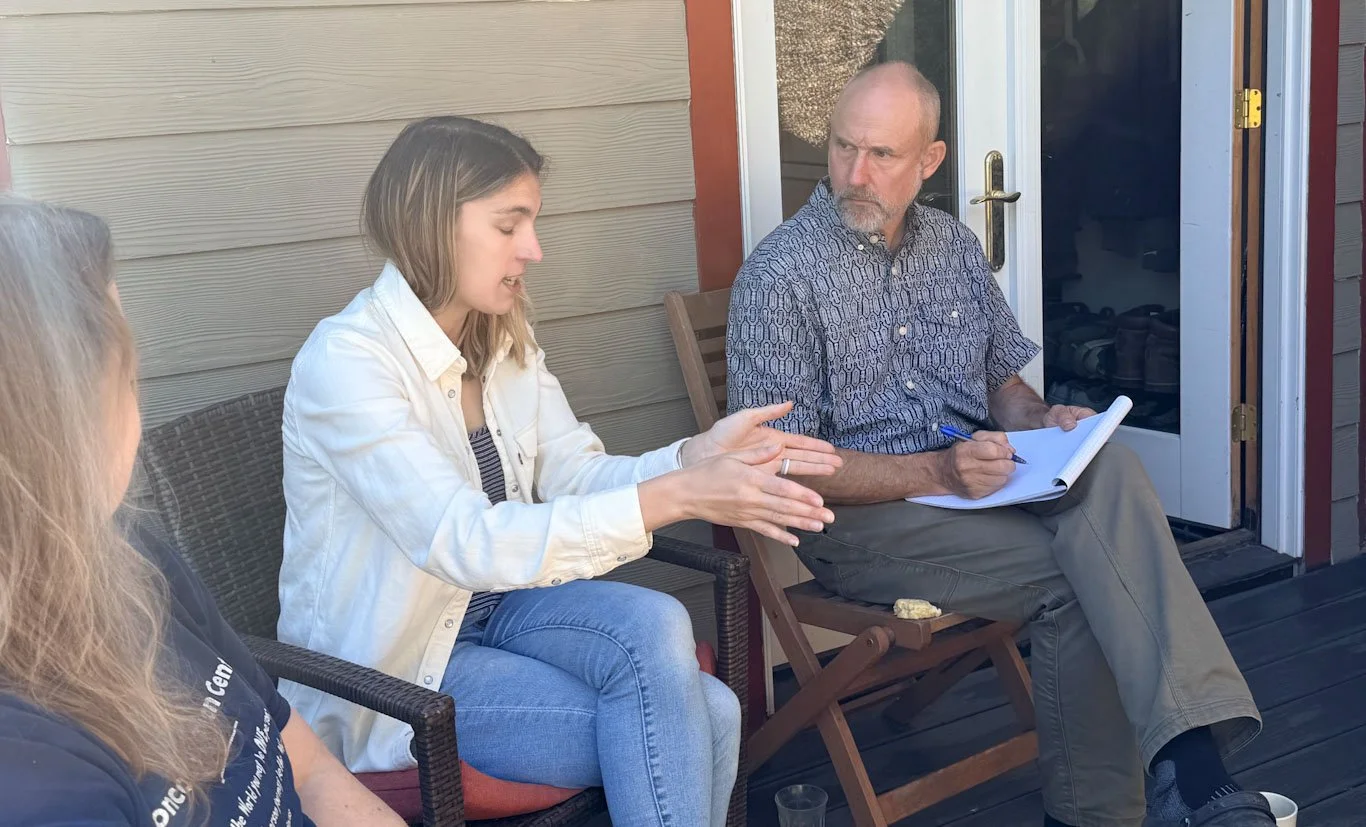
Beyond the prescription story, the conversation covered a lot of ground. I won't try to summarize all of it here — I could write a short book on what came up that morning — but a few themes really struck me.
Healthcare workforce development came up over and over. Even in Winona, there aren't enough nurses, social workers, and mid-level providers to staff the kinds of integrated care programs that produce better outcomes at lower cost. In rural areas of Houston and Fillmore Counties- and in other smaller communities throughout SE Minnesota- the shortage is more acute.
There are promising efforts — some Minnesota universities are working to train healthcare workers and channel them into underserved rural areas — but still, not enough people are coming through the pipeline.
Recruiting, training and inspiring young people to enter medical professions can and should start in high school. There are existing programs in SE Minnesota to do this, but they can and should be expanded: getting young people into that pipeline early seems like exactly the kind of common-sense investment the state should be encouraging.
The providers raised wraparound services as well — the network of senior advocates, care coordinators, and community health workers that helps people navigate the system and stay healthy outside of clinic walls. One of the physicians mentioned that she sees patients who live just across the border in Iowa and Wisconsin and travel to Winona for their primary care — and what strikes her about some of them isn't just their medical situation, but how little support they have back home. Iowa and Wisconsin have cut these services so deeply that she finds herself thinking: the best thing some of these people could do for their healthcare would be to move to Minnesota. We've kept these services alive here — but they're exactly what federal budget cuts are now targeting, and holding the line at the state level is going to take sustained effort.
Another big topic that came up was the aging of SE Minnesota's population. As more of our residents move into their 70s and 80s, the need for home care, assisted living, and elder support services is only going to grow — and the workforce to provide those services is already thin.
I recently traveled to Spring Grove and spent a couple of hours with the owner of one of only two family-owned and operated assisted living facilities in SD 26. State regulations and complex county eligibility and billing coding are big challenges for this facility owner. But staffing is her most persistent challenge: finding and keeping enough CNAs and residential care assistants to run the place well. The corporate chains that own most of the other assisted living facilities in the district have HR departments and recruiting budgets; she is essentially on her own. The facilities most committed to staying rooted in their communities are often the ones with the least capacity to compete for workers — and that's something workforce development policy could directly address.
I'm a proponent of moving Minnesota toward universal, publicly funded health coverage — something along the lines of Senator John Marty's Minnesota Health Plan. This goal is critically important, and Minnesota has both the values and the capacity to lead on this. I also know, from looking honestly at the history, that getting there will take time: building public understanding, working through important questions about financing and implementation, and developing the political will to take on some powerful interests.
As a State Senator, I am determined to work on this over the long haul.
In the meantime, there's meaningful work to do right now — on transparency, on workforce development, on protecting the services that keep people out of the emergency room, and on giving small businesses from Brownsville to Spring Valley a real shot at offering employees decent health care… so they can focus on work, not navigating health insurance bureaucracy.
I am still learning! If you have experiences or ideas you'd like me to know about, please pass them along: I'd genuinely like to hear from you!
— Jack